ServicesTrailer Interchange
Trailer Interchange Insurance in Lithia Springs
When you sign an interchange agreement, you take on the damage risk for a trailer you don't own. We read the agreement, match the limit and perils it asks for, and get the certificate where it needs to go so you can pull the load.
What Trailer Interchange Coverage Does
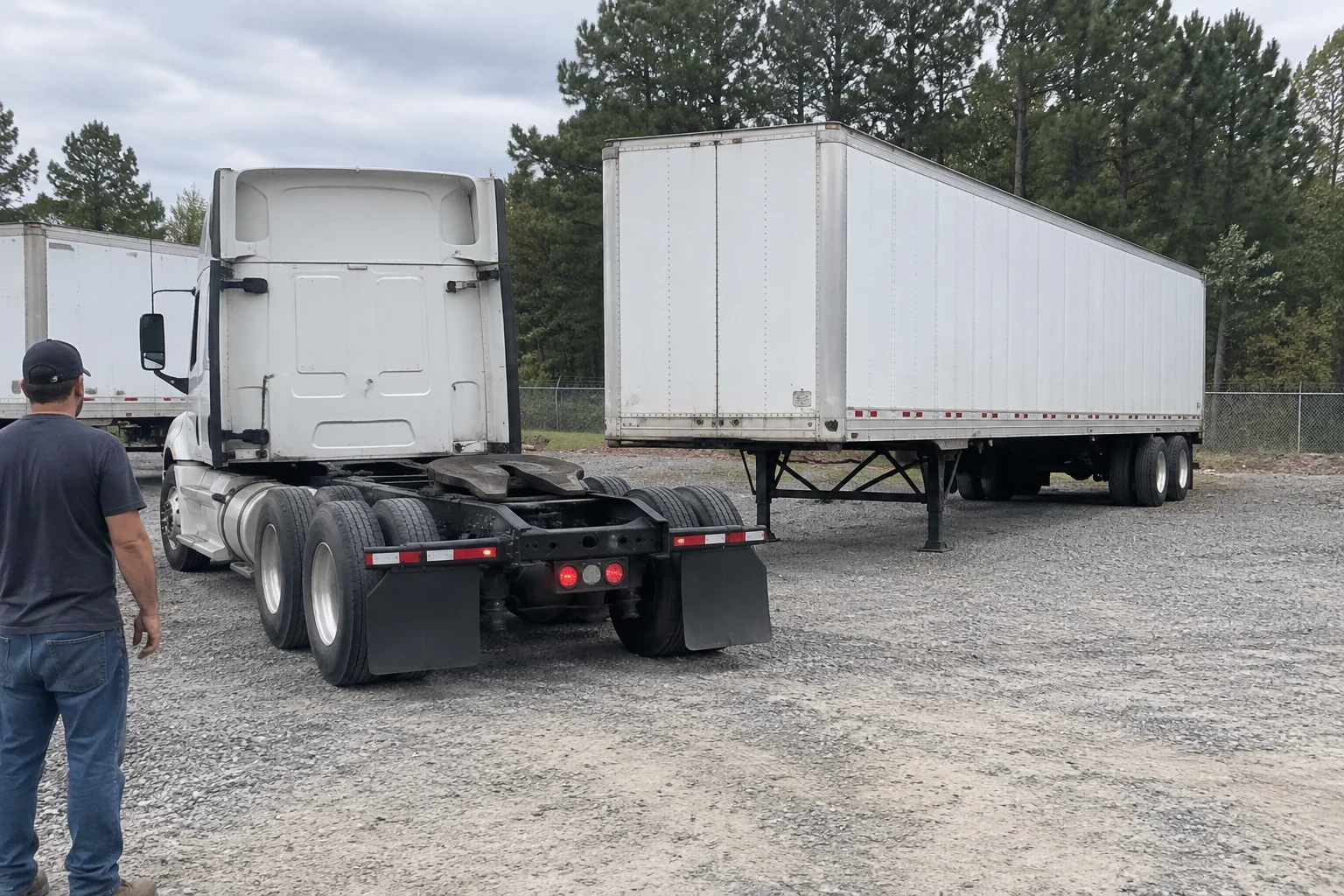
Trailer interchange insurance pays for physical damage to a trailer, container chassis or intermodal unit that belongs to someone else while it is in your possession under a written trailer interchange agreement. Covered causes usually include collision, upset, fire, theft and other comprehensive perils, depending on how the policy is written.
The reason it exists is simple. Your primary auto liability covers damage you cause to other people's property, but it excludes property in your care, custody or control. A borrowed trailer hooked to your tractor falls into that gap. Your own physical damage policy covers equipment you own or lease, not a railroad's chassis or another carrier's dry van.
Most motor carriers who need it run drayage out of rail ramps and ports, swap trailers with other carriers, or haul power-only for shippers around metro Atlanta. If you never sign an agreement and only pull your own trailers, you probably don't need it.
What We Set Up on the Policy
Damage to the non-owned trailer
Collision and comprehensive coverage for the trailer or chassis while it is attached to your power unit, parked in your yard or sitting at a drop lot during the interchange period.
A limit matched to the agreement
Interchange agreements name a minimum limit per unit. We set the limit at or above that figure and check it against the actual value of the equipment you pull, since a reefer trailer is worth far more than a bare chassis.
Deductible you can carry
We quote more than one deductible so you can see how the premium shifts. A higher deductible lowers cost but means more out of pocket on a damaged roll-up door or crushed landing gear.
Certificate of insurance to the equipment owner
We issue the certificate of insurance showing interchange coverage, with the equipment provider listed the way the agreement requires, and resend it when the policy renews.
UIIA participation support
For intermodal work under the Uniform Intermodal Interchange and Facilities Access Agreement, we help make sure your coverage information reaches the program so your access at the ramps isn't held up.
Signs You Need Trailer Interchange Coverage
You were handed an interchange agreement
If a railroad, steamship line, leasing company or another carrier asked you to sign one, it almost certainly requires proof of this coverage before you can pick up equipment.
You run drayage or intermodal
Container chassis and intermodal trailers are owned by someone else. Pulling them without interchange coverage leaves you personally responsible for the repair bill.
You haul power-only
Shippers and brokers who supply the trailer often expect you to cover it while it's on your fifth wheel.
A broker rejected your certificate
A certificate that shows auto liability and cargo but no interchange line is a common reason a load gets pulled at setup.
You swap trailers with another carrier
Even an informal trailer exchange between two small fleets should be in writing and covered on both sides.
How We Put It Together
- 1
Phone or video review
We start with a call. Tell us who owns the equipment, what types you pull and how often, and keep the interchange agreement in front of you so we can go through it together.
- 2
Read the agreement terms
We pick out the required limit, the covered perils, any loss payee or certificate holder wording the equipment owner wants listed, and how long you hold the equipment. Those details decide how the policy is written.
- 3
Quote with options
You get a straight quote showing the limit, deductible and premium, plus what changes if you adjust one of them. We explain what is excluded, such as wear and tear or mechanical breakdown.
- 4
Bind and send the certificate
Once you approve, we bind coverage and send the certificate of insurance to the equipment provider or broker, so you can get dispatched.
What Moves the Price
Interchange premium is driven mostly by how much equipment you are responsible for and how likely it is to get damaged. We can't price it without your details, but these are the factors that matter. Each one shows up on your quote.
- Limit per unit
- A higher limit for a refrigerated trailer costs more than a limit sized for an empty chassis. The agreement sets the floor.
- Type of equipment
- Reefers, dry vans, flatbeds and container chassis carry different values and different damage patterns.
- Radius and where the equipment sits
- Short-haul port and rail runs, long-haul lanes and overnight storage at unsecured lots each change the theft and collision exposure.
- Driver records and loss history
- Clean MVRs and few prior physical damage claims lower the rate. Recent trailer claims raise it.
- Deductible chosen
- Taking on more of each claim yourself reduces the premium.
Trailer Interchange Questions
Something not covered here? (770) 763-7523
How is this different from non-owned trailer coverage?
Trailer interchange applies when there is a written interchange agreement. Non-owned trailer physical damage covers trailers you pull without one, such as a shipper's trailer on a power-only load. Many carriers need one or the other, and some need both. We'll tell you which fits after we see how you operate.
Won't my auto liability pay if I damage the trailer?
No. Auto liability excludes property in your care, custody or control, and a trailer hooked to your truck is exactly that. Liability covers the other driver's car, not the equipment you are pulling.
Does cargo coverage protect the trailer?
No. Motor truck cargo insurance covers the freight inside the trailer. The trailer itself needs interchange or non-owned trailer coverage.
I'm an owner-operator leased to a carrier. Is this my responsibility?
It depends on your lease. Some motor carriers cover interchange for their leased drivers, and others push it to the owner-operator. Read the lease or send it to us, and we'll show you where the responsibility lands.
Can it be added to my current trucking policy?
Often it can be added as an endorsement alongside your physical damage and cargo coverage. Sometimes a separate policy works better. We compare both and give you the cleaner option.
Get the Interchange Line on Your Certificate
Have your interchange agreement and equipment list nearby. We'll go through the required limit and get your quote by phone.