ServicesFleet Truck Insurance
Fleet Truck Insurance in Lithia Springs
Running several trucks on separate policies leads to gaps, mismatched renewal dates and certificates that never quite agree. We put your trucks, drivers and filings on one fleet policy and tell you plainly what is driving your premium and what you can change.
What a Fleet Policy Covers and When It Fits
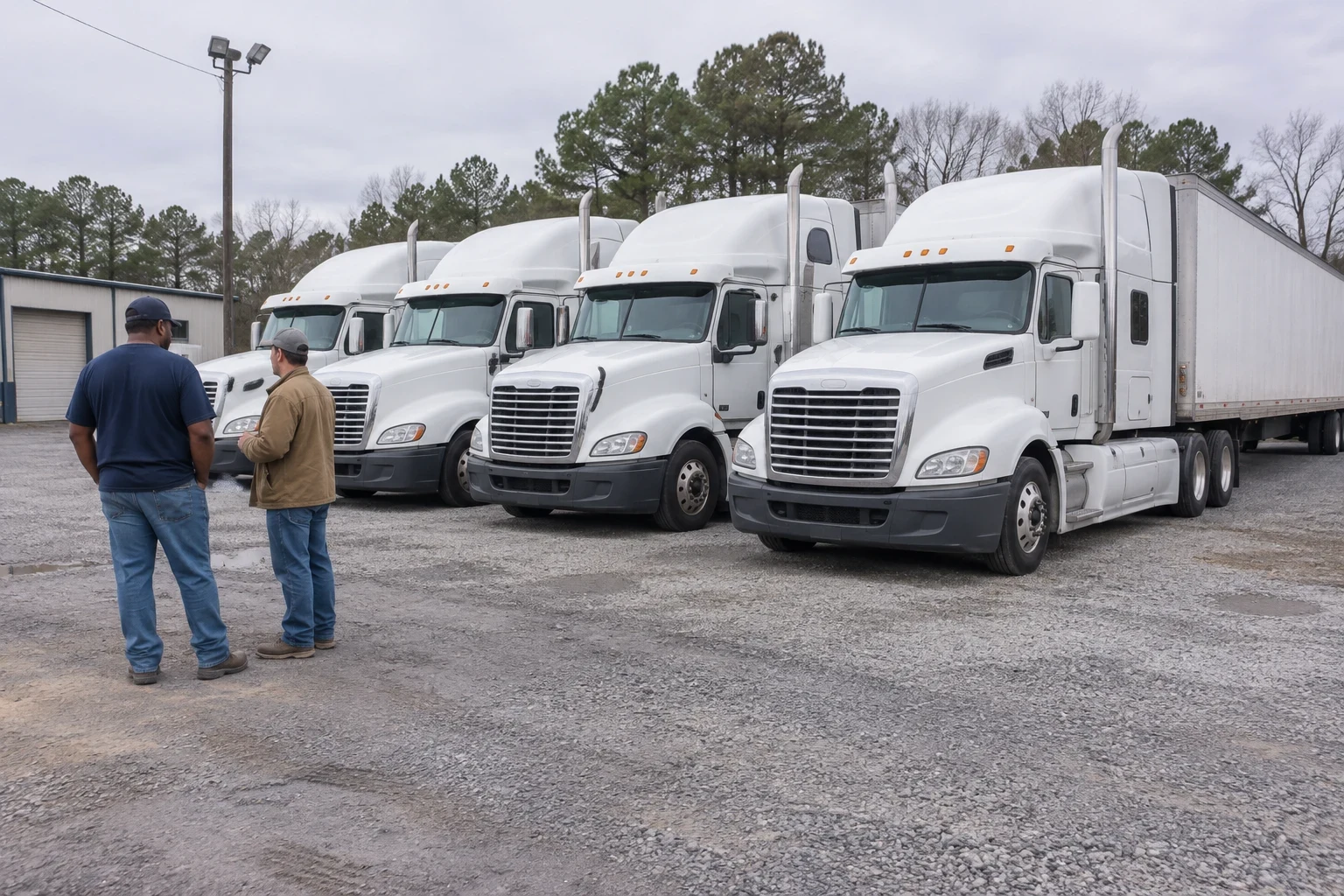
A fleet policy writes all of your power units, trailers and drivers under one contract. Primary auto liability, physical damage, motor truck cargo and any trailer interchange coverage share one effective date, one set of filings and one certificate of insurance format. Most carriers treat an operation as a fleet once it runs several power units, though the exact threshold varies by insurance company.
It is usually the right move when you have grown past two or three trucks, when your owner-operator policies keep renewing on different months, or when brokers ask for certificates faster than you can collect them. If you run under your own MC authority with hired drivers, the fleet structure also gives the underwriter one clean picture of your operation instead of several partial ones.
What We Set Up on Your Fleet Policy
Vehicle schedule
We list each truck and trailer by VIN, year, stated value and garaging location. An accurate schedule is what makes a physical damage claim pay out at the value you expect.
Driver schedule
Every driver is listed with CDL class and years of experience. The underwriter pulls motor vehicle records on each one, so we review them with you first and flag anyone likely to be excluded.
Federal and state filings
We handle the BMC-91X filing tied to your DOT number and MC authority and confirm the MCS-90 endorsement is attached. A lapse here can put your authority at risk, so we watch the dates.
Adding and removing units
When you buy a truck or retire one, the policy needs to know. We explain whether your coverage is scheduled or carries an automatic-add window for newly acquired vehicles, and how long that window lasts on your specific policy.
Certificates of insurance
Shippers and brokers want certificates that name them correctly and show the right limits. We issue them from the one policy so every certificate matches.
Cargo and interchange options
Depending on what you haul, we add motor truck cargo with limits that fit your loads and trailer interchange if you pull trailers you do not own.

Signs Your Operation Has Outgrown Single-Truck Policies
- Renewals scattered across the year
- Each truck renews on a different month, so you are re-submitting the same paperwork several times a year and paying for it in time.
- Certificates that do not match
- A broker rejects a certificate because one truck shows a different liability limit than the others. That is a sign coverage was bought piece by piece.
- Hired drivers on owner-operator coverage
- Policies written for a driver who owns and runs one truck are not built for employees. Mixing the two leads to coverage questions after a loss.
- A new truck sat uncovered
- If you bought a unit and were not sure whether it was covered on the drive home, your policy structure needs work.
- Premium jumps you cannot explain
- When nobody can tell you which driver, violation or claim moved the price, you are missing the information a fleet review provides.
How We Build Your Fleet Quote
- 1
Gather the operation details
By phone, video or at our office, we collect your DOT number, vehicle list, driver list, commodities hauled and typical radius. Around Lithia Springs that often means a mix of I-20 regional runs and longer lanes, and each is rated differently.
- 2
Pull loss runs and driver records
We get three to five years of loss runs from your current carriers and review driver MVRs. This is where most pricing surprises come from, so we find them before the underwriter does.
- 3
Take it to market
We bring the full package to insurance companies that write fleets of your size and type. A complete package gets a real quote instead of an estimate that changes later, and we call you as the numbers come back.
- 4
Walk through the options
We go line by line through limits, deductibles and exclusions and tell you which trade-offs actually save money. You decide; we do not push extra coverage you do not need.
- 5
Bind, file and issue certificates
Once you choose, we bind coverage, confirm the federal filings are in place and send certificates to your brokers and shippers.
What Moves a Fleet Premium
Fleet premiums are built from a few measurable inputs. Some you can influence quickly, others take a renewal cycle or two to improve. We show you which ones apply to your operation.
- Driver experience and records
- Years of CDL experience, recent violations and at-fault accidents on each driver's MVR carry heavy weight. One driver with a poor record can raise the rate for the whole schedule.
- Loss history
- Claim frequency matters as much as claim size. Several small cargo or physical damage claims can hurt more than one larger loss.
- Radius and commodity
- Long-haul and interstate operations price differently than local work, and hauling high-value or hazardous freight raises cargo and liability rates.
- Equipment value and age
- Newer, higher-value tractors raise physical damage premium. Your choice of deductible on each unit changes that number directly.
- Safety scores and controls
- CSA BASIC scores tied to your DOT number are visible to underwriters. Documented driver hiring standards, maintenance records and dash cameras can help your case.
Fleet Insurance Questions
- How many trucks do I need to get a fleet policy?
- There is no single rule. Many insurance companies start treating an operation as a fleet at a handful of power units, and some will write smaller groups on a fleet form. We tell you which approach fits your size when we review your operation.
- Can I keep a driver with a speeding ticket on the policy?
- Often yes, depending on how recent the violation is and what else is on the record. Serious violations or multiple incidents can lead to an exclusion. We go over MVRs with you before anything goes to an underwriter, so you are not surprised.
- What happens when I add a truck mid-term?
- Call us before the truck goes into service. We add it to the schedule, adjust the premium for the remaining term and update your certificates. If your policy has an automatic-add provision, we explain its limits so you know exactly how you are covered.
- Will moving to a fleet policy lower my premium?
- Not always. It usually cleans up gaps and paperwork, and it can lower cost when your drivers and loss history are solid. If your numbers point to a higher rate, we tell you why and what would bring it down.
- What should I have ready for the call?
- Your DOT number, a list of vehicles with VINs, each driver's name, CDL details and date of birth, and loss runs from your current carriers. If you do not have loss runs on hand, we can help you get them from those carriers.

Get Your Whole Fleet on One Policy
Tell us about your trucks, drivers and lanes, and we will build a quote that explains every line of the premium. Fleets in Lithia Springs, Douglasville, Austell and the surrounding area work with us by phone, video or at our office.